
Dora: Find Real Companionship
aprilsaidevSocial
4.120.47K Reviews
- Version
- 1.2.15
- Installs
- 500.00K
- Age Rating
- Mature 17+
Screenshots

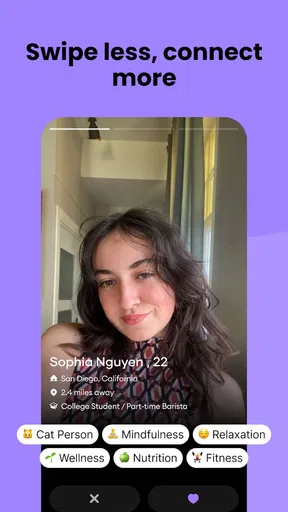
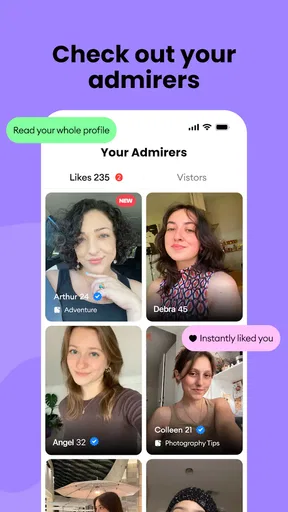
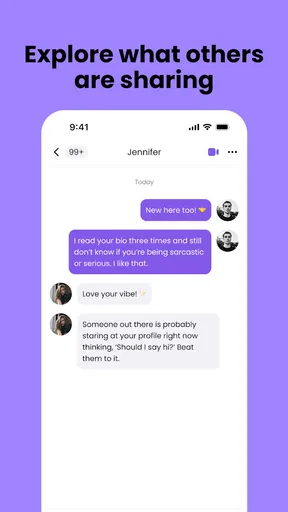
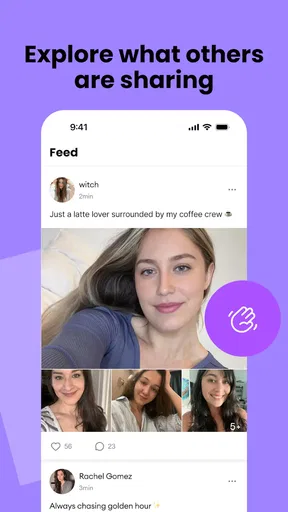
Our Review of Dora: Find Real Companionship
 Analysis by Appyee
I found Dora: Find Real Companionship more appealing as a calmer dating space than as another place to collect matches. Its central idea is easy to understand: help adults look for a genuine connection without making the experience feel like a frantic popularity contest. After spending time with it, my view is that Dora works best for people who want to approach dating with patience and a little more intention, while users who expect a huge, highly filtered dating marketplace may find it too limited or too quiet.
Dora is a free social app from aprilsaidev, aimed at mature users and available for Android devices running version 8.0 or later. It has attracted over half a million installs, with an average rating of 4.1 from roughly thirty-two thousand ratings. Those figures suggest that the app has built a real audience, although they also set a useful expectation: this is an established niche option, not necessarily the busiest dating service in every location.
What using Dora feels like in everyday dating
The first thing I noticed is that Dora’s appeal depends less on discovering endless profiles and more on how willing I was to slow down. Many dating apps encourage quick decisions. You see a photo, skim a line or two, make a choice, and move on. That style can be convenient, but it often turns a potentially meaningful conversation into a sequence of tiny judgments. Dora’s warmer positioning makes more sense when I treat it as a place to look for compatibility rather than a game of speed.
That difference matters in an ordinary situation. Imagine opening the app after work, when you have only a few minutes and do not want to perform a polished version of yourself. A sensible Dora routine is to review a small number of promising profiles, pay attention to the person’s wording, and begin with something connected to what they actually shared. That approach takes slightly more effort than sending a generic greeting, but it gives the conversation a better chance of becoming personal.
I also think the app suits people who are tired of treating dating like shopping. The word “companionship” points toward a broader kind of connection, and that makes Dora feel less narrowly focused on immediate romance. It can be a comfortable starting point for someone who wants to meet an adult with similar expectations, provided both people communicate clearly about what they are looking for.
Still, a gentle tone does not automatically create good conversations. The quality of the experience depends heavily on the people nearby, how actively they use the service, and whether profiles contain enough substance to respond to. Dora can provide the setting, but I still had to do the important work: read carefully, ask sensible questions, notice inconsistent replies, and avoid treating a pleasant first exchange as proof of trust.
A better way to build a profile
One practical lesson I would give a new user is not to write a profile that sounds like an advertisement. On an app built around real connection, broad claims such as “I love everything” or “just ask” waste valuable space. A more useful profile gives someone a specific opening: a weekend habit, a type of conversation you enjoy, or a small detail that reveals how you spend your time.
I would also avoid trying to appeal to everyone. A narrower, honest description can reduce casual attention, but it improves the chance that a conversation begins with a shared point of interest. That is especially important on a service where the experience may feel more personal than the rapid-fire matching style found in larger alternatives.
Photos matter, but I would not make the profile entirely visual. One clear current photo can establish familiarity; the written details should then explain the person behind it. If a profile gives me nothing to ask about, I am unlikely to start a meaningful conversation even if the pictures are attractive. Dora rewards the user who makes the first message easy without turning the profile into a long autobiography.
Where the app’s warm approach is genuinely useful
The strongest part of Dora is its focus. The app is not trying to be a general-purpose social network, a public entertainment feed, or a replacement for every communication tool on a phone. Its identity is tied to adult companionship and dating, which gives the experience a clearer purpose than apps where romantic interest is mixed with unrelated content.
I found that clarity helpful when deciding how to behave. On a broad social platform, a new contact may be looking for friendship, attention, networking, entertainment, or romance, and the uncertainty can make every interaction awkward. Dora gives the conversation a more understandable starting point. That does not remove the need to ask about intentions, but it reduces some of the ambiguity around why two people are there.
Another strength is psychological rather than technical. People who dislike aggressive swiping culture may appreciate a service that presents itself as more human and less transactional. I would not call Dora a cure for dating fatigue, but its tone can make it easier to approach the process with realistic expectations. Instead of trying to maximize activity, I can focus on whether a particular exchange feels respectful and reciprocal.
There is also a useful trade-off here. A quieter environment can make interactions feel less disposable, but it may also mean fewer immediate possibilities. Someone in a large city or a place with an active user base may find that balance comfortable. Someone in a small town, or someone seeking a very specific match, may prefer a larger service with a wider pool even if that service feels more crowded.
The limitation that shapes the whole experience
Dora’s biggest weakness is connected to its biggest promise: a warm dating app needs enough active, thoughtful people to sustain that atmosphere. If the local pool is thin, the app cannot manufacture variety. You may see fewer suitable profiles, wait longer for replies, or encounter conversations that stop before they develop. That is not necessarily a flaw in the app’s concept, but it is a real limitation for anyone deciding whether to make it their main dating tool.
I would therefore test the app without assuming that its overall audience size translates directly to useful activity where I live. A service can have a substantial global footprint and still feel quiet in a particular neighborhood. The practical question is not only whether Dora has users, but whether it has enough compatible users within a reasonable distance and with similar expectations.
The mature age rating is another important consideration. Dora is intended for adults, so it is not an appropriate choice for teenagers or anyone looking for a youth-oriented community. Adults should still use ordinary dating-app judgment: avoid sharing sensitive personal details too early, be cautious about requests for money or urgent favors, and arrange an initial meeting in a public place if an online conversation moves offline.
I would also keep the free label in perspective. The app can be downloaded without an upfront purchase, but optional in-app purchases range from a few dollars to amounts approaching one hundred dollars per item. That wide range means I would explore the free experience first and decide whether any paid option solves a problem I actually have. Paying does not make a weak conversation stronger, and it should never be treated as a shortcut to trust or compatibility.
How Dora compares with larger dating alternatives
Compared with mainstream dating apps, Dora’s clearest advantage is its narrower emotional promise. The larger services often provide more people, more familiar discovery patterns, and a stronger sense of constant activity. They can be better for users who want maximum reach, frequent new profiles, or a very precise search across a large population.
Dora makes more sense when the user values atmosphere over volume. I would choose it before a busier alternative if I felt exhausted by endless swiping or wanted conversations to begin from a more relationship-oriented premise. I would choose the larger service instead if I needed a broad local pool, wanted to compare several dating styles at once, or lived somewhere where Dora felt inactive.
It is also worth distinguishing Dora from ordinary social media. On a general network, a person may have more ways to display their personality, but romantic intent is often unclear. Dora’s dedicated purpose makes the first interaction more direct. The trade-off is that the app may offer less of the surrounding community activity and entertainment that keeps people returning to a general platform.
For someone already using another dating app, Dora does not have to be an all-or-nothing replacement. It can serve as a second environment with a different pace. I would avoid copying the same rushed behavior from one service to the other, though. If I open Dora only to swipe quickly and measure success by the number of matches, I lose the quality that makes its concept interesting.
Small habits that improve the experience
My first recommendation is to set a clear time boundary. A short, focused session is more useful than repeatedly checking for attention throughout the day. Read profiles properly, send one thoughtful message, and then leave the app alone. This prevents the search for companionship from becoming another source of constant distraction.
My second recommendation is to move from profile talk to real compatibility questions gradually. Start with something specific and low-pressure, then notice whether the other person responds with similar effort. A conversation becomes informative when both people can discuss routines, boundaries, expectations, and the kind of connection they want without one person doing all the work.
My third recommendation is to treat consistency as more valuable than charm. A very engaging first exchange can be enjoyable, but repeated respect, clear communication, and reasonable pacing tell me more. If someone avoids basic questions, pushes for private information, or becomes demanding quickly, I would end the conversation regardless of how promising it seemed at first.
A fourth useful habit is to review the profile after a few conversations, not just before the first message. If the person’s claims, availability, or intentions keep changing, that inconsistency deserves attention. Dora may encourage a friendly tone, but friendliness should not replace practical judgment. The best connection is one where warmth and reliability appear together.
Who should try it, and who should skip it
I would recommend Dora to an adult who wants a free starting point for dating and companionship, prefers a less aggressive atmosphere, and is comfortable judging success by the quality of conversations rather than the number of matches. It is particularly suitable for someone willing to write a thoughtful profile and wait for a compatible exchange instead of expecting instant results.
I would be more cautious about recommending it as the only dating app for people with very specific preferences, people living in areas with few nearby users, or anyone who needs a highly active service every time they open it. Those users may get better results from a larger alternative, then use Dora as a complementary option if its tone appeals to them.
I would also skip it if I were looking for casual entertainment with no interest in adult dating or companionship. The mature audience and focused purpose make it a poor fit for someone who wants a general social feed. Likewise, anyone under the adult age requirement should not use it.
From a practical installation standpoint, Dora is not demanding in terms of platform age: it supports Android 8.0 and later. The current release is version 1.2.15, so I would keep the app updated through the normal store process rather than relying on an old installation. That is simple advice, but it matters for any app used for personal conversations.
My final verdict on Dora
Dora is most convincing when I judge it by its intended mood rather than by the scale of the biggest dating platforms. It offers a focused, adult-oriented place to look for connection, and its strongest quality is the invitation to approach dating more deliberately. I enjoyed that sense of direction, especially when I treated each profile as a person to understand instead of another item to sort.
At the same time, the app cannot escape the realities of social products. Local activity, profile quality, response rates, and personal safety will determine whether it becomes useful. The free entry point makes trying it reasonable, but the optional purchases deserve restraint, particularly because spending more cannot compensate for a small or mismatched local audience.
My recommendation is straightforward: try Dora if you want a calmer adult dating experience and are prepared to invest attention in genuine conversation. Give it enough time to judge the people available in your area, but do not force it to become your only option if the local pool feels quiet. For me, it is a promising niche choice with a clear emotional identity, not a universal replacement for every dating app.
Verdict
Strengths of Dora: Find Real Companionship
- Focuses on meaningful connections rather than endless swiping.
- Profile prompts help users show personality and interests.
- Discovery tools make it easier to find compatible people.
- Clean, approachable design is easy for new users to understand.
- Useful for people seeking friendship, dating, or genuine conversation.
Limitations of Dora: Find Real Companionship
- The user base may be smaller outside major cities.
- Some features or interactions may require a paid subscription.
- Matching quality depends heavily on how complete profiles are.
- New users may encounter inactive or rarely updated profiles.
- Sharing personal details requires careful attention to privacy settings.
Similar Picks in This Category
View All
Meta Platforms, Inc.4.6

Instagram4.0

Likee-Live, Chat & Party Games
Likeme Pte. Ltd.4.4

Facebook Lite
Meta Platforms, Inc.4.5

TikTok - Videos, Shop & LIVE
TikTok Pte. Ltd.4.0

Moj: Free Short Drama & Reels
ShareChat4.1
Frequently Asked Questions
What is Dora: Find Real Companionship?
Dora: Find Real Companionship is a social and relationship-focused app designed to help people make meaningful connections rather than simply collect matches. It may be used to discover compatible individuals, start conversations, and build friendships or romantic relationships. Before downloading, users should review the current app description, available regions, and age requirements because features and access can vary by platform and location.
How does Dora help users find compatible people?
Dora generally focuses on introducing users to people who may share similar interests, preferences, or relationship goals. After creating a profile, you may be able to browse suggested connections, interact with profiles, and begin private conversations. The quality of recommendations depends heavily on the information you provide, so completing your profile honestly and clearly can improve the relevance of the people you discover.
Is Dora: Find Real Companionship free to use?
The app may offer free access to its basic social or discovery features, while additional tools can require in-app purchases or a subscription. These paid options might include enhanced visibility, extra interactions, or other premium benefits. Check the Google Play Store or Apple App Store listing for the latest pricing, trial conditions, renewal details, and cancellation instructions before confirming any purchase.
Is Dora safe for meeting and chatting with strangers?
Dora can provide tools intended to support online interaction, but no social or dating app can guarantee that every profile is genuine or trustworthy. Avoid sharing passwords, financial information, home addresses, or intimate content with people you have just met. Use available blocking and reporting functions, keep conversations inside the app initially, and arrange any in-person meeting publicly and cautiously.
What should I know before creating a Dora account?
You should check the app’s minimum age requirement, privacy policy, permissions, and account-deletion process before signing up. Creating a useful profile may require personal details, photos, interests, or communication preferences. Use information you are comfortable sharing, choose strong account credentials, and review visibility settings carefully. Also remember that uninstalling the app may not automatically delete your profile or stored data.
